The skills gap is one of the hardest problems in workforce development: roles evolve faster than people can be trained, and traditional programs can't scale to every employee at once. AI tutors are changing that math. By delivering personalized, on-demand learning to thousands of people simultaneously, companies are closing skills gaps at a speed and cost that classroom training never could. Here's how they're actually doing it.
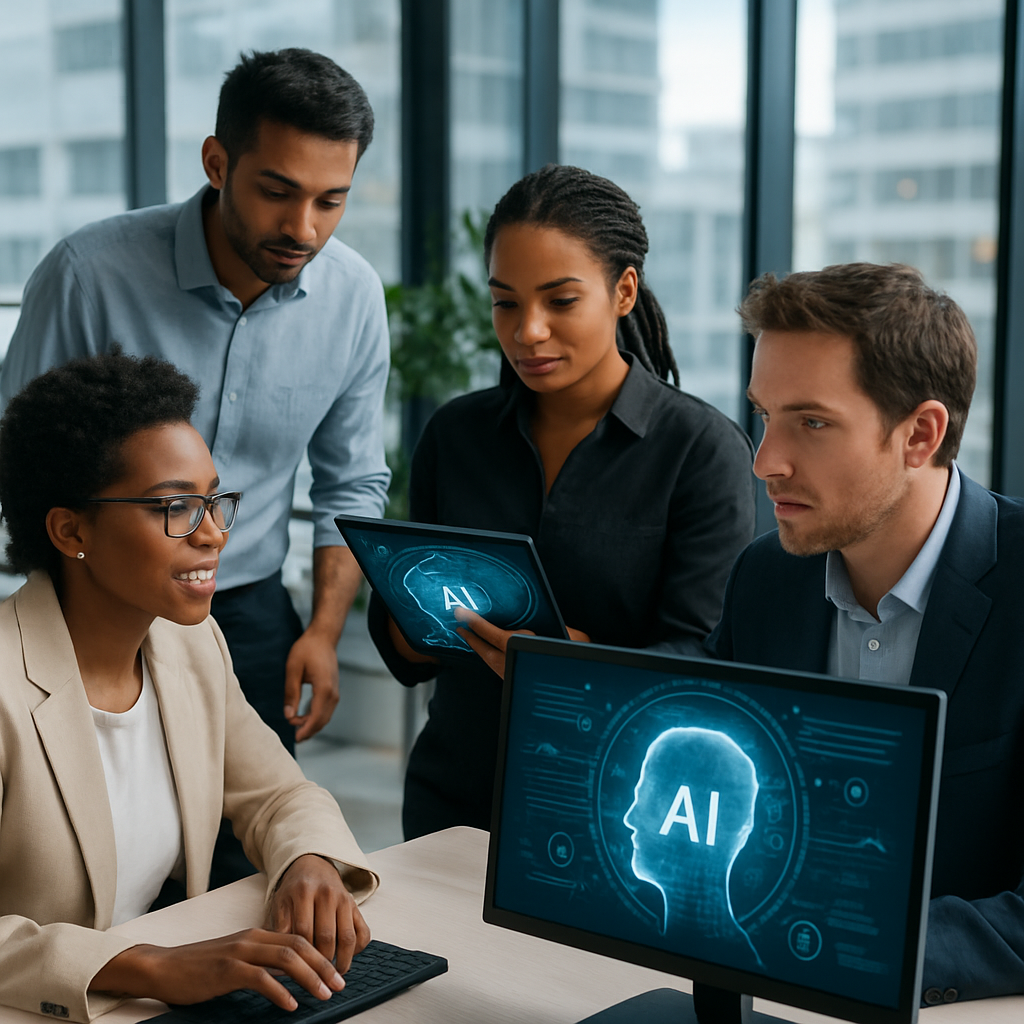
Why the Skills Gap Resists Traditional Training 🕳️
The gap persists because conventional training fights three constraints at once. It doesn't scale — you can only fit so many people in a cohort with a limited number of instructors. It isn't personalized — everyone gets the same content regardless of what they already know, so experts are bored and novices are lost. And it doesn't stick — a one-off workshop fades within weeks because there's no reinforcement when people are back at their desks. The result is expensive training that reaches few people and changes little. AI tutors attack all three constraints directly.
How AI Tutors Close the Gap at Scale 🚀
The core advantage is that an AI tutor gives every employee a personalized instructor at the same time, for roughly the same marginal cost whether it's ten people or ten thousand.
- Personalization at scale. Each learner gets content matched to their current level and role, so time isn't wasted on what they already know.
- On-demand, in the flow of work. Employees learn a skill the moment they need it for a real task — far more effective than learning months ahead of use.
- Adaptive pacing. Fast learners accelerate; those who struggle get more practice and re-explanation instead of being left behind.
- Reinforcement over time. AI tutors can revisit weak areas with spaced repetition, addressing the "forgetting curve" that kills one-off training.
- Continuous availability. Global, shift-based, and remote workforces can learn on their own schedule without coordinating a room and a trainer.
Where Companies Are Applying This 🎯
Common, high-value applications include:
- AI and digital fluency — bringing the whole workforce up to a baseline as tools change underneath them.
- Onboarding and role-specific ramp-up — getting new hires productive faster with a tutor that adapts to their background.
- Reskilling for shifting roles — moving employees into adjacent roles as some tasks get automated.
- Compliance and technical certification prep — practice and reinforcement tuned to each person's gaps.
Traditional Training vs. AI Tutors at Scale 📊
| Dimension | Traditional training | AI tutors |
|---|---|---|
| Reach | Limited by instructors/rooms | Effectively unlimited |
| Personalization | One-size-fits-all | Per learner |
| Timing | Scheduled, ahead of need | On demand, in the flow of work |
| Retention | Fades without reinforcement | Reinforced over time |
| Cost per additional learner | High | Low |
A Rollout Playbook 🛠️
Closing a skills gap with AI tutors works best as a deliberate program, not a tool drop:
- Map the gap. Identify the specific skills the business needs and where employees actually stand today.
- Start with a focused pilot. Pick one team and one skill area to prove the model before going wide.
- Tie learning to real work. Connect the tutor's content to tasks people do, so practice transfers immediately.
- Make it part of the workflow. Embed learning into normal routines rather than treating it as a separate event people must remember to do.
- Support, don't mandate blindly. Give managers visibility and encourage use, but let the personalization do the persuading.
Measuring Whether It's Working 📈
Skip vanity metrics like course completion — finishing a module proves nothing about capability. Instead track skill demonstration (can people now do the task?), time-to-productivity for new hires, and downstream business outcomes the upskilling was meant to drive. The honest test of any skills-gap program is whether the work gets better, faster, or cheaper afterward. AI tutors make it realistic to reach everyone; clear measurement is what proves the gap is actually closing.
🎬 Related Video
Further Reading
- AI Closes the $5.5 Trillion Enterprise Skills Gap
- AI-Powered Education: DeVry University Redefines Learning and Innovation
- How to close the AI skills gap in education | Cengage posted on the topic | LinkedIn
🚀 Ready to Build with AI?
Contact Silicon Prime — we help companies design and ship production-grade AI products.
Comments